Mrs. Remington and Miss Tucker's 1st grade classes have wrapped up a study of nonfiction writing. Students learned to research questions about a topic, record new facts, and use the facts they collected to create an informational piece of writing.
The students will celebrate their hard work with an Writing Celebration this week.
Below are audio versions of books written two young authors. Listen as they read their last release!
1st graders have been learning about habitats and how they support life. One of the important concepts 1st graders have learned is that habitats have to be appropriate for the animal or plant in order for them to thrive.
You don't see bunnies swimming in the Pacific. You don't see fish hopping in a meadow.
After really understanding this concept, 1st graders noticed a habitat in the school that wasn't appropriate for the animal living there.
"Mr. T" the turtle lives in a tank that sits on a table in the primary hallway. Mr. T's tank wasn't exactly fitting for him. Turtles like Mr. T need a source of heat and a place to rest. Mr. T had neither.
So, the first grade classes decided to host a brownie sale to raise money for an appropriate habitat for Mr. T. The classes earned over $200 for a new habitat for Mr. T. Now he has a warming lamp, a place to rest, and a source of fresh water.
The beginning of something positive: Miss Tucker's class is displaying acts of kindness outside their room.
A couple of weeks ago, I posted a story about a group of high school students from West High School in Iowa City, Iowa who are using social media to send complements to their classmates. I asked the question of how we could do something like this as a building, and I'm happy to say that some classroom teachers have answered through action.
Heather Tucker, a 1st grade teacher at Hilliard Horizon, emailed our staff about a plan she already had for her classroom called 100 Acts of Kindness:
"If anyone is interested in learning more about the 100 Acts of Kindness project, email me and I will put a copy of it in your mailbox. I will send home a letter about the project on Friday, Jan. 18th, and the project will start Jan. 22nd and end on Valentine's Day. I am encouraging students to participate in Dr. King's dream by doing 100 acts of kindness at home, in the community and at school. This project can be adapted to take place any time of the year..."
Miss Tucker's project features some of the same aspects that the Westhigh Bros project in Iowa has: sharing acts of kindness and displaying it for a community to see. It really is the perfect answer to the question of how we could do something similar to Westhigh Bros in an elementary school.
Close-up of Miss Tucker's display
More classrooms have already started, and we are looking forward to more joining in on this positive community building project.
Today's post comes from Heather Tucker, 1st Grade Teacher at Hilliard Horizon Elementary
Exploring Changes with VoiceThread
In Social Studies, we are learning about how things have changed over time.
Each student chose a topic they wanted wanted to explore, for example, TV, games, baby dolls, houses, schools, clothing, telephones, etc. We looked for images of each topic on the internet. This helped us compare things from the past and present and how they change over time. Some students even brought in artifacts from home, like a James Brown record! :)
After exploring, students drew a picture of what their topic looked like in the past. Then we really had to use our creative thinking and our new knowledge to come up with a prediction of what we think each thing might look like and what it might do to help us in the future. After drawing our pictures, we wrote down a caption to go with each past, present and future picture. We used the computer webcam to take pictures of our posters and then recorded our comments.
This is such a cool way to share our new knowledge with others! Take a look at some of the VoiceThread projects students created:
Four weeks ago, Mrs. Marsh started a project-based learning experience with her 1st grade students by asking this simple question:
What is a leader?
The project involved aspects of math, social studies, science, and language arts, and featured leaders like our principal, Mr. Blum, and our superintendent of schools, Dale McVey.
Students began by brainstorming different characteristics they thought described a leader and by thinking about important leaders in their lives. They interviewed family members about who they consider leaders and what makes a leader.
Mrs. Marsh had different guest speakers come in to talk about leadership. She coached her students on asking quality interview questions. Mr. McVey shared that you may think you're a leader, but you're not if no one is following you. The students compared the different leadership qualities of the guest speakers and added the information to their research.
While the students continued to research and share ideas, Mrs. Marsh read 6 books that featured 6 different characters that demonstrated some sort of leadership qualities.
After researching what makes a leader and reading each of the books, students worked together in cooperative learning groups. Their task: develop an election campaign for the book character they thought was the best leader.
Students worked on campaign speeches and campaign poster to gear up for the big event: the election.
Next, students campaigned in different precincts (the other 1st grade classrooms) to try and get other students to vote for their book character. They made campaign speeches to try and win the vote.
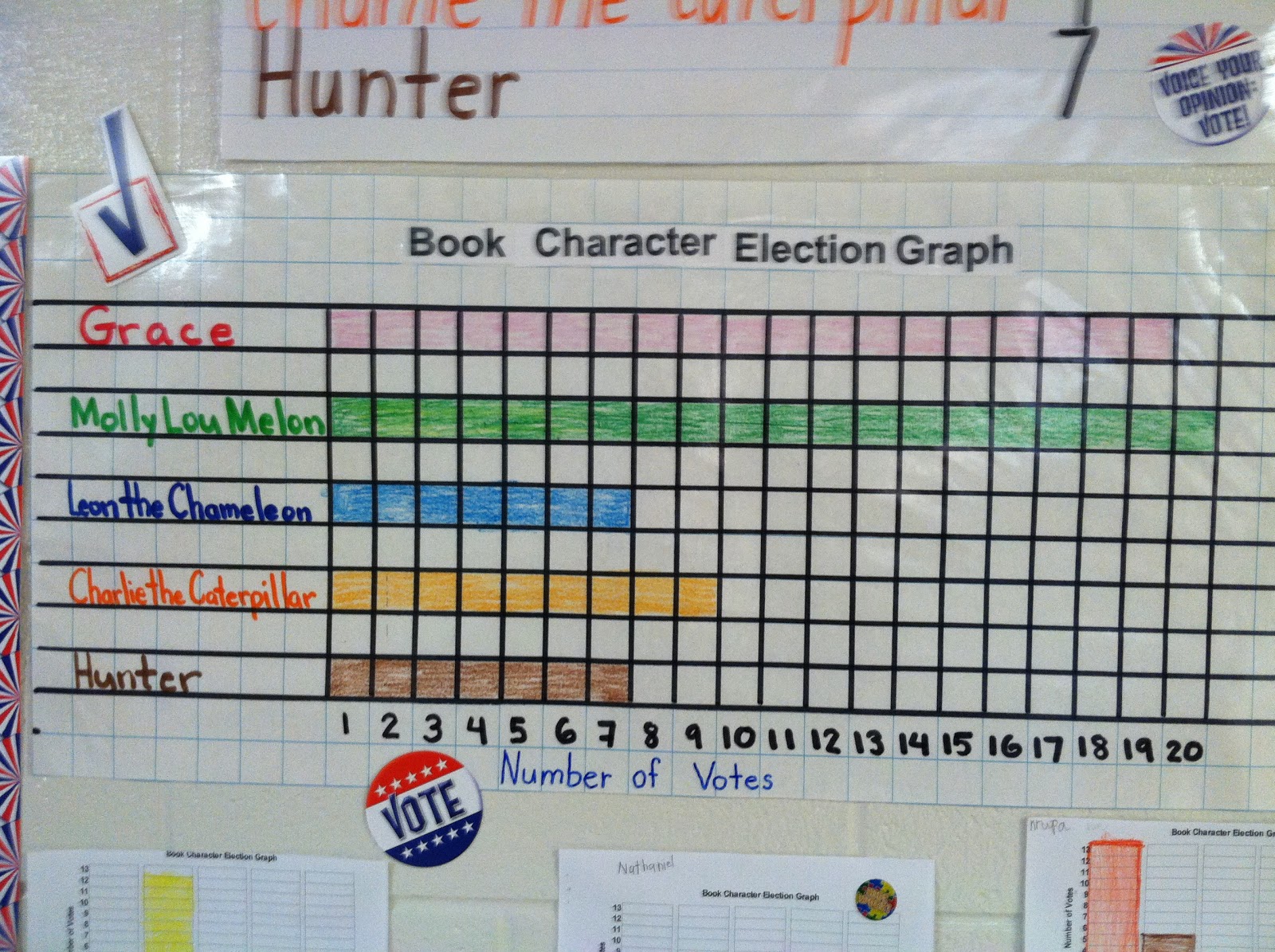
After the campaigning was done, the voting began. Each precinct voted on one of book characters. As the votes came in, Mrs. Marsh's students tabulated the results:
Somes students were stunned to find that while their book character won in one of the precincts, they did not win the over all vote:
The winner? Molly Lou Mellon!
Overall, the students learned a great deal about leadership and about what leaders do in order to lead others.
Enjoy this VoiceThread of the book character campaign posters and speeches:
Each day, teachers throughout our school engage their students in "Number Talks" as a part of their math lesson. A number talk is an instructional method that strengthens each student's mental math skills. A number talk is designed to help students understand a concept that will eventually help them be more efficient when solving math problems.
There are certain guidelines for a number talk. These guidelines allow students to be flexible in their thinking about a math problem and to give them the necessary time they need to successful solve a problem.
Number Talk Norms for learning
A couple of guidelines are really important in making a number talk successful.. The first is using hand signals to communicate that your are "thinking" about a problem or if you have a strategy to share. Hand signals keep students from waving their hands or shouting out answers and allows everyone to think through the problem.
"I'm ready to share my thinking."
"I was thinking the same thing."
The second important guideline is sharing your thinking and listening to others share. This allows students to hear different strategies for the same problem and helps them see that there may be more efficient ways of solving math problems.
Watch as Mrs. Remington leads her class in a number talk. She is wanting students to see "5" fast and then quickly add on what is left.


.JPG)
.JPG)
.JPG)